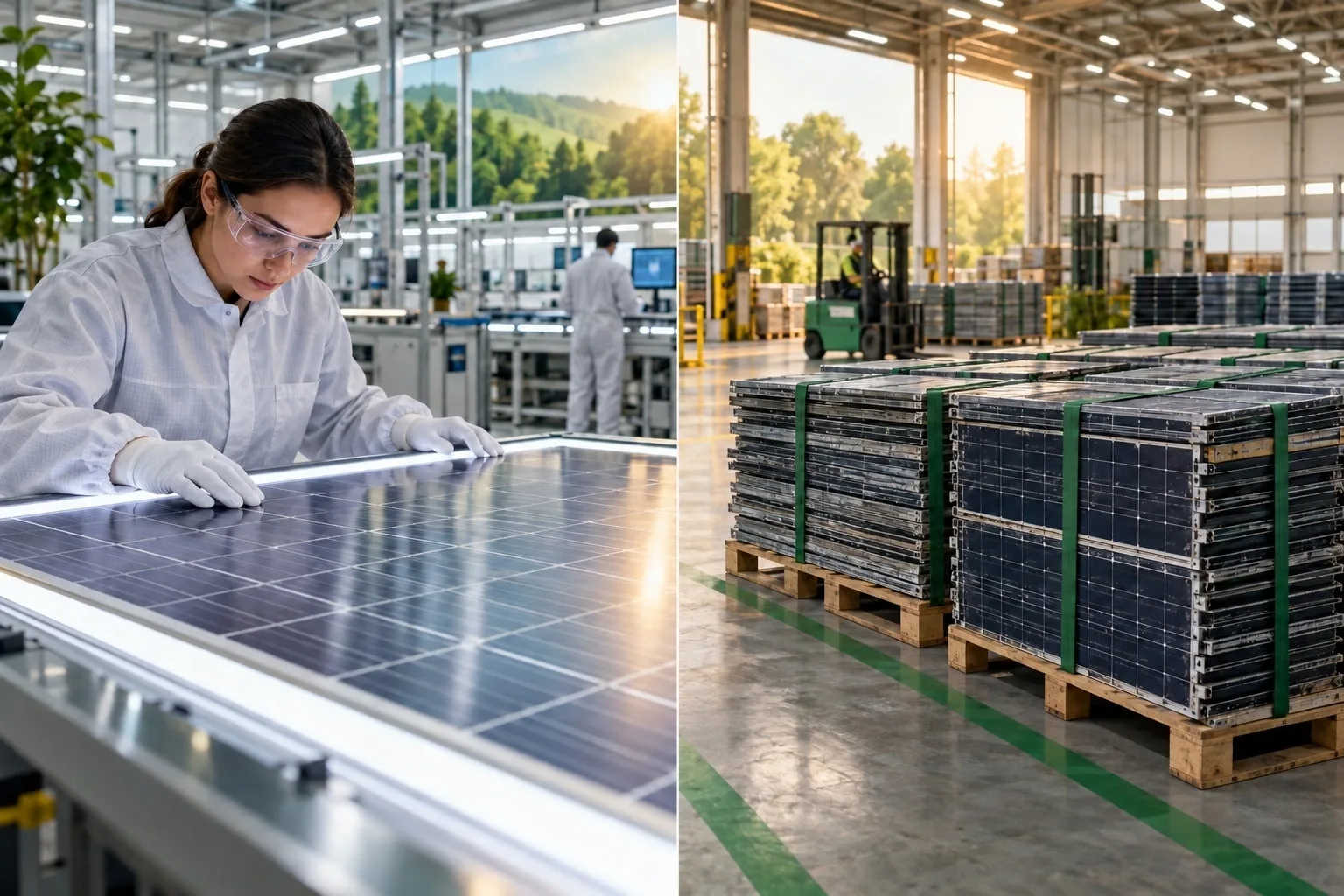
Solar Circularity & PV Module Recycling
Responsible solar, from first generation to end of life.
Understand module condition, reuse possibilities and responsible end-of-life routes through qualified channels.
Understand the solution ↓THE SOLUTION, EXPLAINED
Understand what it means for your site.
Solar circularity means thinking about what happens to equipment throughout its life—not only when it is installed. A module being removed from a site may be damaged, underperforming or simply replaced during repowering. Each situation needs a different decision about continued use, assessment or an end-of-life route.
Visual appearance alone cannot establish that a used module is safe or suitable for reuse. Electrical condition, physical damage, identification records and intended application must be reviewed. Reuse or refurbishment is considered only where appropriate technical checks support it.
Suntara supports assessment and coordination with qualified channels; it does not operate its own recycling facility. Recycling and collection arrangements depend on the material, location, condition and the authorisations of the entities involved. Recovery outcomes and commercial terms must be confirmed for the actual batch.
What shapes the right solution?
Suntara Solar coordinates with qualified partners; we do not operate a recycling facility. Collection and recovery must be handled by appropriately authorised entities.
FROM DISCUSSION TO DELIVERY
A clear path forward.
- 01
Identify and document
Build an inventory of module types, quantities, location, condition and available serial or purchase records. Clarify why the equipment is being removed.
- 02
Assess the appropriate route
Consider condition assessment and possible reuse where suitable, or an end-of-life route through appropriately authorised entities. Confirm acceptance and handling requirements before collection.
- 03
Coordinate safe handover
Agree packaging, access, transport responsibilities and the documents to accompany the transfer. Any recycling confirmation depends on the receiving channel and its actual processing records.
Scope we can discuss
The final engagement is tailored to your site and agreed requirements.
- 01Module identification and condition assessment
- 02Safe-handling and collection coordination
- 03Reuse and refurbishment assessment where appropriate
- 04Authorised recycling-channel coordination
- 05Documentation and traceability where provided
- 06Applicable regulatory requirements
Useful information to have ready
- Module quantity, manufacturer and technology where known
- Location, access conditions and safe-to-take photographs
- Reason for removal and known damage or faults
- Available inventory records and intended replacement schedule
You do not need every detail to begin. Share what you know and we can identify the next information needed.